

Africa’s Hidden Warming Source: Rice
A food-security solution is becoming an unseen driver of the continent's warming.

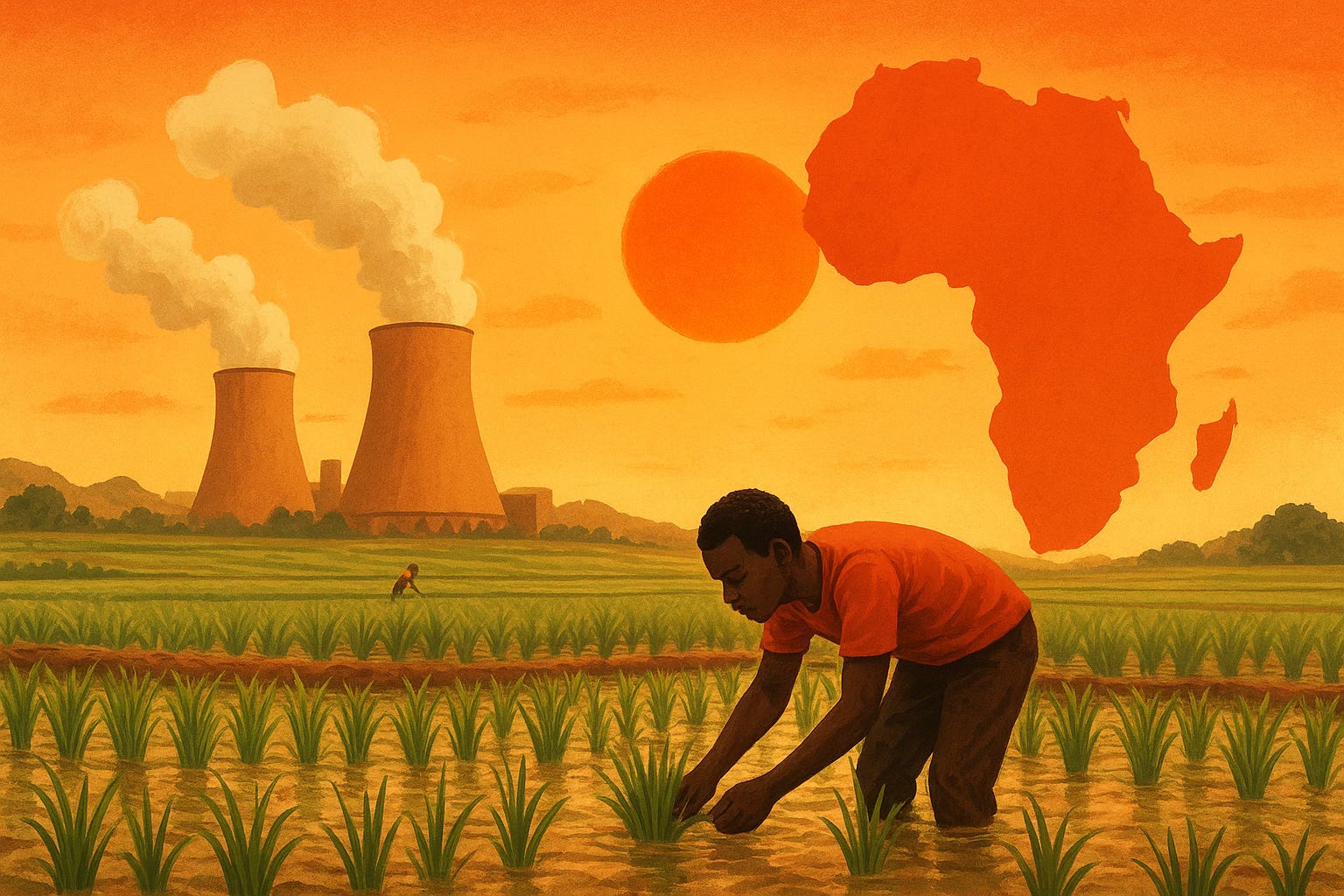
Africa’s rising temperatures are often explained by familiar forces: growing cities, expanding industries, and global emissions from wealthy nations.
A new scientific study, however, suggests an unexpected player that could be shaping the continent’s climate future–its own rice fields.
According to a paper in Scientific Reports, Africa’s massive expansion of rice farming over the past six decades has released vast quantities of methane, one of the most powerful greenhouse gases, and may be significantly contributing to the continent’s rapid warming.
Rice wasn’t always the centerpiece of African diets. For generations, families relied on traditional staples such as maize, sorghum, and cassava. But as populations grew and tastes changed–especially in bustling urban centers–rice quickly became a preferred daily food.
Governments responded by pushing for more domestic rice production, launching major agricultural programs to reduce costly imports. The most prominent of these, the Coalition for African Rice Development (CARD), set the goal of doubling rice output across dozens of countries.
The outcome was dramatic. Between 1960 and 2018, Africa’s rice cultivation area surged by 436 percent, adding more than 14 million hectares of new rice fields, mostly in West Africa.
But this rapid growth came with a hidden consequence. Much of Africa’s rice is grown in flooded or waterlogged fields. These wet conditions create a perfect environment for methane-producing microbes that thrive in oxygen-poor soils.
Unlike carbon dioxide, methane doesn’t stay in the atmosphere for centuries. For the period it lasts, it packs a punch. It traps heat 28 to 34 times more powerfully than CO₂ over a 100-year period.
The study finds that agricultural methane emissions across Africa jumped from 347 million tons in 1990 to 603 million tons in 2018. Agriculture is now the continent’s single largest source of methane, and rice fields are among the biggest contributors within that sector.
To understand how much this matters for Africa’s climate, the researchers used global climate models and a statistical technique known as Regular Optimal Fingerprinting. This allowed them to pull apart the influence of greenhouse gases, aerosols, and natural factors on temperature trends.
Their conclusion: greenhouse gases, especially methane, are the primary cause of Africa’s warming over the past century.
Africa’s surface temperatures have climbed from 0.3°C above pre-industrial levels in 1960 to 1.3°C today. Greenhouse gases alone accounted for 0.47°C to 0.92°C of this rise.
Notably, the increase in rice farmland and agricultural methane emissions aligns almost perfectly with the acceleration of this warming. While the authors caution that correlation does not prove direct causation, especially in a data-scarce region like Africa, they argue the pattern is compelling and warrants urgent attention.
The findings place African policymakers in a tough spot. For a continent whose population is set to double by 2050, expanding rice production is essential for food security. But expanding rice farming in its current form may further heat an already warming continent–one acutely vulnerable to deadly heatwaves, drought, and crop failures.
“This is a dual challenge,” the authors say. Africa must increase food production, and it must reduce emissions that worsen local warming.
VISUAL OF THE WEEK
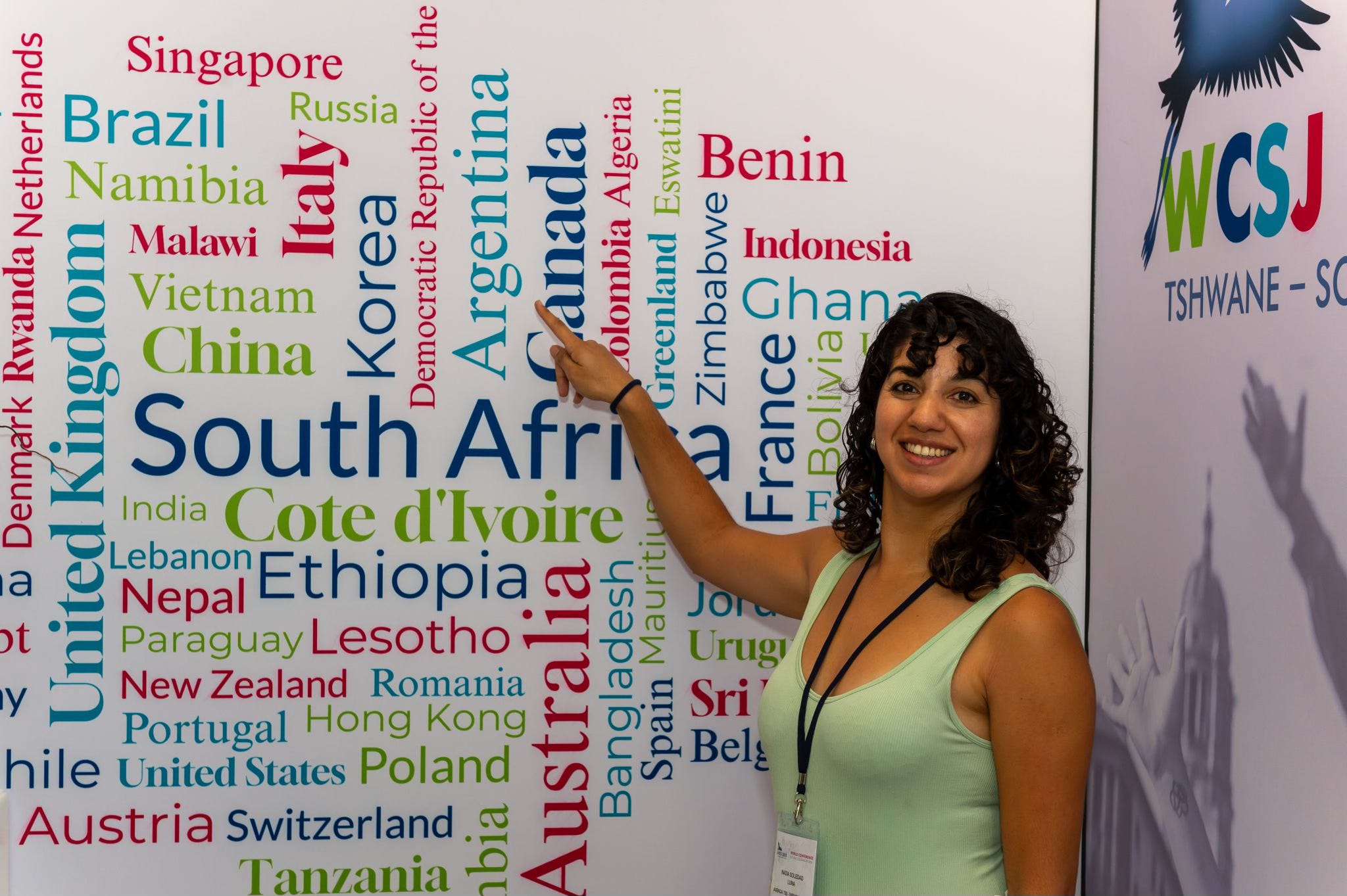
South Africa last week hosted 2025 World Conference of Science Journalists. Discussions focused on combating misinformation, integrating AI in newsrooms, strengthening climate and health reporting, and promoting inclusive, socially responsible science journalism.
QUOTE OF THE WEEK
“Our African politicians are not always accountable but it’s ridiculous to imagine that they are simply going to fold their hands and let their people die. Even though they don’t cough up all the lost funding, there is a case to be made that they can achieve more with the available funding through efficiency gains even in service delivery alone,” Dr. Catherine Kyobutungi on why Africa politicians must fund the health sector in the wake of funding cuts by USAID.
RESEARCH HIGHLIGHTS
Digital tools boost Africa’s HIV prevention efforts: Digital health tools and artificial intelligence are becoming powerful new allies in Africa’s fight against HIV. With mobile phones now common across the continent, countries are using apps, chatbots, and data systems to help people learn their HIV risk, order self-test kits, start prevention medicine, and stay connected to care. AI is helping officials spot infection “hotspots,” predict who may need services most, and improve how clinics collect and use data. These tools can reach young people and other groups who often avoid traditional clinics because of stigma or distance. But challenges remain, including poor internet access, privacy concerns, and limited digital skills. Experts say success will require strong leadership, community involvement, and reliable funding. [Reference, The Lancet Global Health]
A hidden branch of early humans: DNA from 28 ancient southern Africans reveals a long-lost human lineage that thrived in isolation for thousands of years. These people, who lived 150 to 10,000 years ago, carried gene patterns unlike any found in humans today. Their lineage split from other Africans roughly 300,000 years ago, making it one of the oldest known branches of our species. Southern Africa acted as a refuge, with almost no outside mixing until herders and farmers arrived about 1,400 years ago. Modern Khoe-San groups still carry much of this ancestry. The study also uncovers human-specific genetic changes linked to kidney function and sunlight protection, offering fresh clues to how early Homo sapiens adapted and evolved. [Reference, Nature]
Africa’s hidden biodiversity crisis: A major new assessment shows that sub-Saharan Africa has already lost nearly a quarter of its wildlife and plant abundance compared with pre-industrial times. Using on-the-ground insights from 200 African biodiversity experts, the researchers created the most locally informed map yet of ecosystem health across the region. They found huge variation: Namibia and Botswana remain highly intact, while Rwanda and Nigeria have suffered the steepest losses. Much of Africa’s remaining biodiversity survives not in parks, but in everyday rangelands and natural forests where people live and work. The biggest drivers of decline are cropland expansion, intensive farming and land degradation. The study gives decision-makers clearer, context-specific guidance to protect nature where it’s most at risk—and most resilient. [Reference, Nature]
—END—