

Why Central Africa’s Rainforests Matter To You And The Chemistry That Can Help Save Them
Demand drives supply. If we stop buying stolen nature, we stop encouraging its destruction.

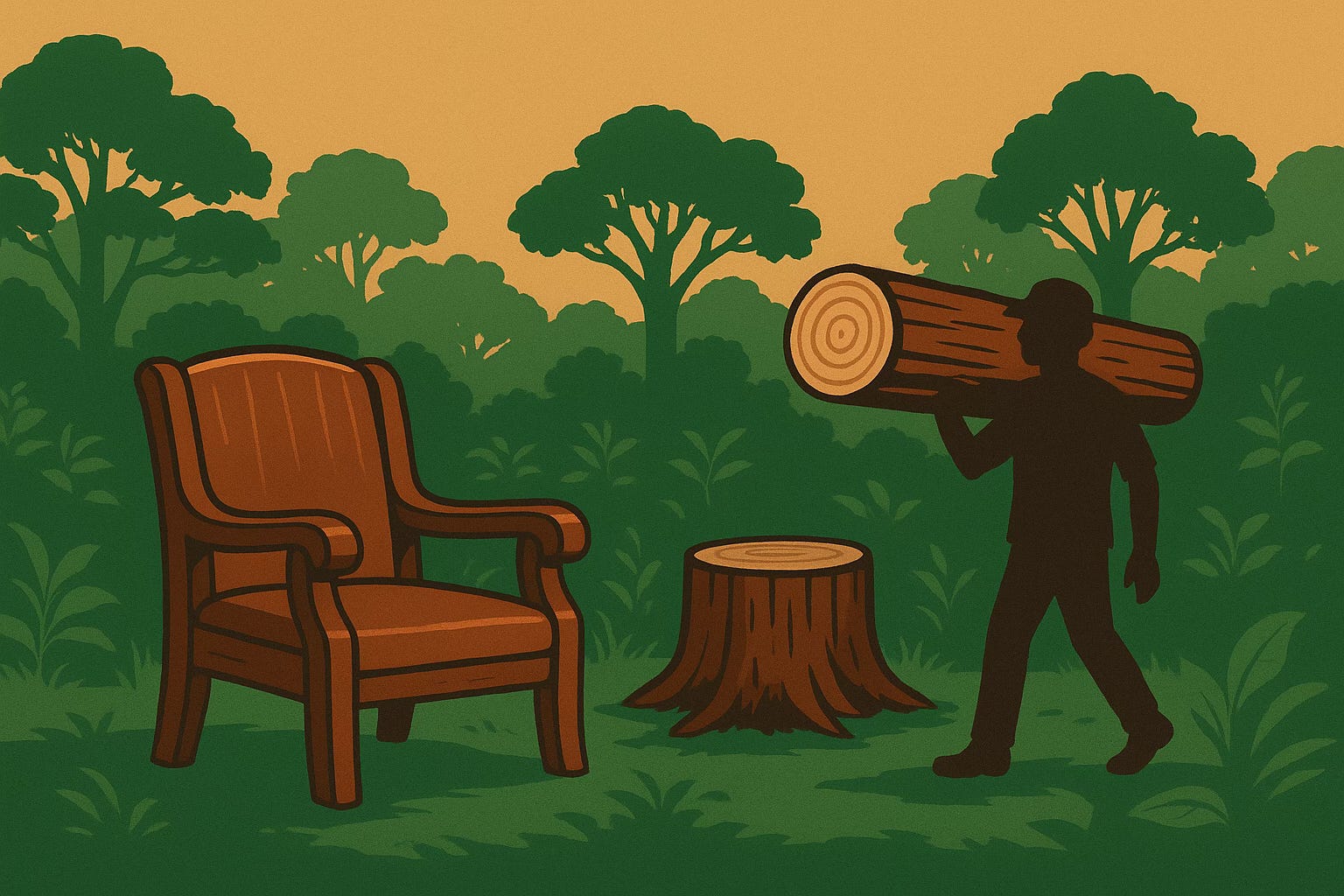
If you live in Kenya, Uganda or any other country in the region, that glittering, expensive wooden furniture you wish to purchase or you already have in your living room may have come from timber logged in Central Africa’s rainforests. And there’s a high chance it was cut down illegally.
When I investigated the movement of this illegal timber, often of indigenous tree species, from the Democratic Republic of Congo, I was shocked by the lengths people go to move it. It can take weeks for a truck carrying the wood to travel through Congo and reach the Ugandan border, where buyers of many nationalities wait eagerly for it.
This wood is very expensive. A single piece can cost as much as 150 USD. That sounds like a lot of money, doesn’t it?
But think of it another way. These forests are vital for Sub-Saharan Africa because they play a key role in rainfall formation. Now imagine if the rains disappeared. How would we survive? Unimaginable.
Here’s another important point: the rainforests of Central Africa are the largest carbon sink in the region. This is a big deal at a time when the world is getting hotter and more uncomfortable to live in.
That shiny furniture comes from tropical trees that are hundreds of years old. These trees “sink carbon” by absorbing the dirty air — the smoke from cars, factories, and burning — and locking it away so the planet doesn’t overheat. These forests also help clean the air we all breathe.
I hope I have convinced you that these forests are as valuable as your most prized possession.
Illegal logging problem
However, illegal logging remains one of the biggest threats to these forests. Studies estimate that up to 90% of timber exports from the region may come from illegal sources. Authorities have struggled to stop this trade because it is almost impossible to prove where a piece of wood really came from once it leaves the forest.
I chose to focus on this subject because a new study offers a promising solution to this challenge.
According to a paper published in Communications Earth & Environment, researchers have developed a high-precision method that combines genetic and chemical analyses to trace timber back to its true origin. The approach, tested on a valuable African hardwood called Azobé (Lophira alata), achieved 94% accuracy in identifying where trees were cut–a level of precision never before reached in tropical timber tracing.
Why tracing timber is so hard
Every log exported from Africa must legally come with documents stating its species and the exact forest where it was harvested. But as I found in my own investigation, those papers can be easily forged, making it difficult for customs officials to detect fraud.
Scientists have long tried to solve this problem using forensic techniques. Some rely on DNA to find genetic differences between trees from different regions. Others use stable isotopes, which are chemical signatures in the wood that reflect rainfall or temperature. A third method examines trace elements in the wood, which are influenced by local soil chemistry.
Each technique works but not perfectly. DNA can identify broad regions but often struggles to separate nearby forests. Isotope readings are useful where climates differ sharply, but in Central Africa, weather patterns are fairly uniform. Elemental analysis is good at detecting local differences but may confuse samples from distant areas.
On their own, none of these methods consistently produced accuracy above 80% — too low for reliable use in court or trade regulation.
The experiment
The research team sampled Azobé trees from 13 logging sites across Cameroon, Gabon, and the Republic of the Congo. For each tree, they tested:
DNA markers from the chloroplast genome;
Stable isotopes of oxygen, hydrogen, and sulfur; and
41 different elements, such as calcium, magnesium, and trace metals from the soil.
Each tree’s genetic and chemical profile was then fed into a computer model to see if it could correctly match the sample to its original site.
The results
Individually, each method performed moderately well:
DNA analysis was correct 46% of the time,
Isotope analysis scored 41%, and
Elemental analysis reached 73%.
When all three were combined, accuracy shot up to 94%, allowing scientists to pinpoint a tree’s origin within 100 kilometers, and often within 50 kilometers.
This is the most precise tracing method ever achieved for tropical timber. With this breakthrough, science may finally give Africa’s forests a fighting chance and make it far harder for timber thieves to hide.
Bottom line
As scientists innovate to find better ways of catching those who destroy forests that sustain life, we too can play our part. Start by asking anyone selling you that glittering furniture to prove that it wasn’t made from wood stolen from vital rainforests.
Demand drives supply. If we stop buying stolen nature, we stop encouraging its destruction.
VISUAL OF THE WEEK
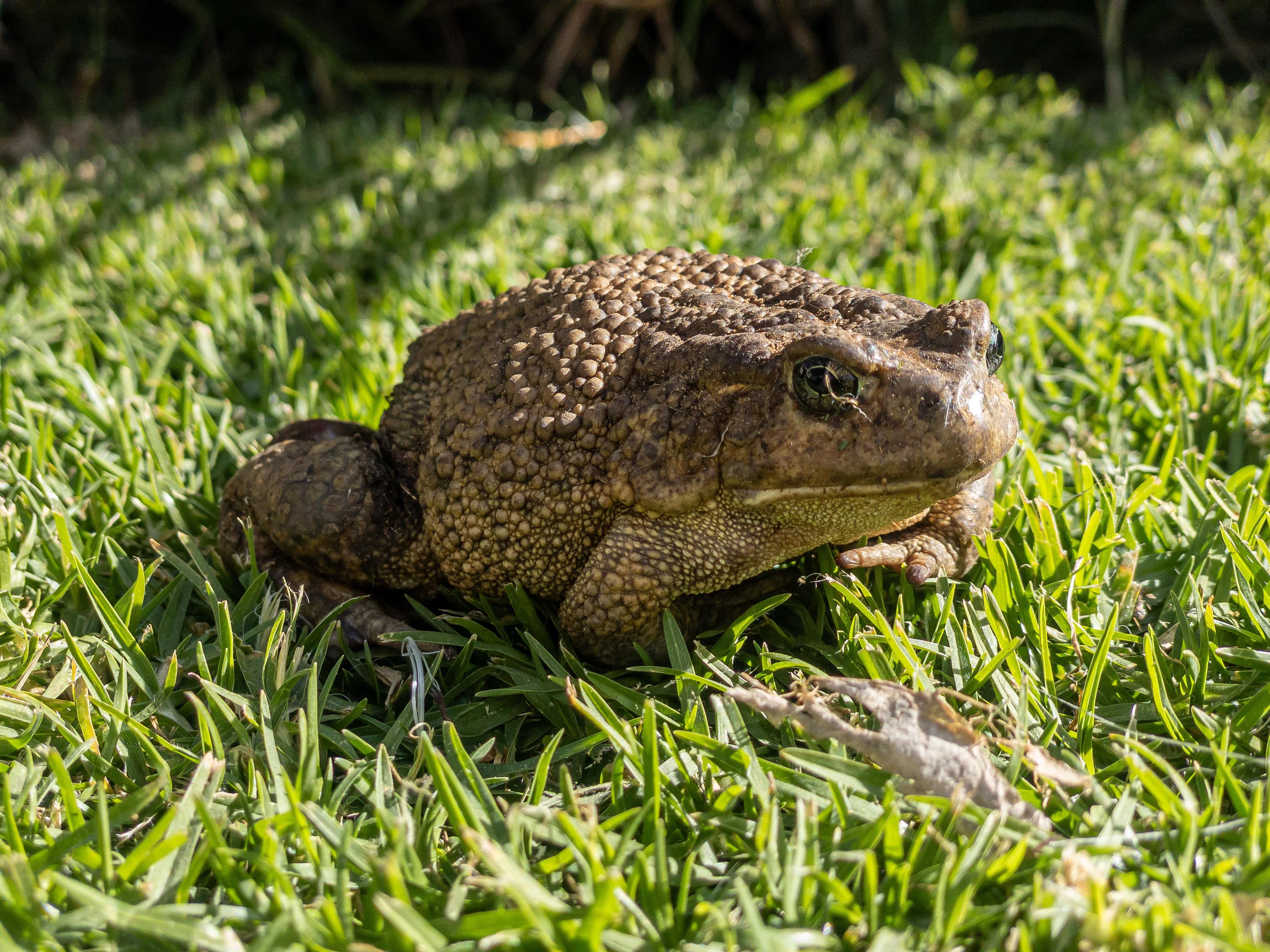
Africa common toad also known as the square-marked toad or Egyptian toad
How did toads come to Africa? According to a new study, scientists say toads, which started out in South America about 61 million years ago, didn’t travel through North America as once thought. Instead, they likely moved straight from South America to Africa–maybe through Antarctica or by floating across the ocean on mats of plants.
QUOTE OF THE WEEK
“The recovery of the last patient just six weeks after the outbreak was declared is a remarkable achievement that shows how strong partnership, national expertise and determination have contributed to overcoming challenges to save and protect lives,” Dr Mohamed Janabi, WHO Regional Director for Africa, on DRC coming close to beating Ebola.
RESEARCH HIGHLIGHTS
Imported Malaria Still a Big Threat in Saudi Arabia: most malaria cases in Saudi Arabia come from travellers arriving from countries where the disease is common, not from local transmission. Between 2022 and 2023, out of more than 1.4 million people tested, about 0.7% were positive for malaria. The Jazan region, near the Yemen border, recorded the most cases (59%), followed by Makkah (20%). Adults aged 15 and above were the most affected. The deadliest parasite, Plasmodium falciparum,caused about 64% of infections. No local cases were found, showing that malaria has been largely eliminated within Saudi Arabia. [Reference, PLOS ONE]
New AI System Tracks Rainfall Across Africa in Real Time: Scientists have developed a new system called Rain over Africa (RoA) that uses artificial intelligence to track rain across the continent almost instantly. The method uses images from Meteosat satellites and deep learning to estimate rainfall every 15 minutes, which is much faster than existing systems that take hours or even days. This makes it useful for disaster preparedness and water management. RoA’s accuracy is nearly as good as expensive systems like NASA’s IMERG, but it works with simpler equipment and covers all of Africa. It can also show the likelihood of rain in a given place, helping forecasters and farmers make faster, safer decisions. [Reference, JGR Atmospheres]
How Africa’s Shifting Lakes Shaped the Evolution of Snails: This study looked at small freshwater snails called Gabbiella that live in the African Great Lakes—like Victoria, Albert, Edward, Kivu, and Tanganyika—to understand how ancient changes in the region’s water systems affected their evolution. By comparing snail DNA from across these lakes and nearby rivers, scientists discovered that these species started diversifying as far back as the Miocene period (over 20 million years ago) and continued evolving during later geological times. The main drivers of their evolution were earth movements (rifting), changes in drainage systems, and shifts in lake water levels over time. These natural events separated snail populations, leading to new subspecies. The findings show that the region’s dramatic geological and climate history—not just random migration—played a key role in shaping today’s aquatic biodiversity. [Reference, Journal of Biogeography]
—END—